Progressive memory disorders gradually limit a person’s independence. Caring for them at home then requires the family to be constantly present and to understand how the illness develops. The choice of a care facility therefore depends on whether its programme takes into account the stage of the disease, the person’s medical needs and their established habits.

What you’ll learn from this article
- Who is the Memory Care programme at Origin Centre Otwock intended for?
- How does admission work and what types of stay are available?
- What medical and nursing care does the unit provide?
- What occupational therapies do we offer within the programme?
- What does a typical day look like for residents?
At Origin Centre Otwock, the Memory Care programme is designed for people with Alzheimer’s disease, other forms of dementia, Parkinson’s disease, and memory disorders related to illness or age. Participants receive round-the-clock nursing care, regular medical visits and an individual therapy programme. A stay may be long-term, short-term, respite or diagnostic.
Who is the dementia care programme intended for?
The programme serves people with dementia-related conditions who need support with everyday functioning. We also admit patients with memory disorders of undetermined origin, resulting from illness or the ageing process. What participants have in common is a reduced ability to carry out basic activities independently, because the disease impairs their planning, orientation and memory.
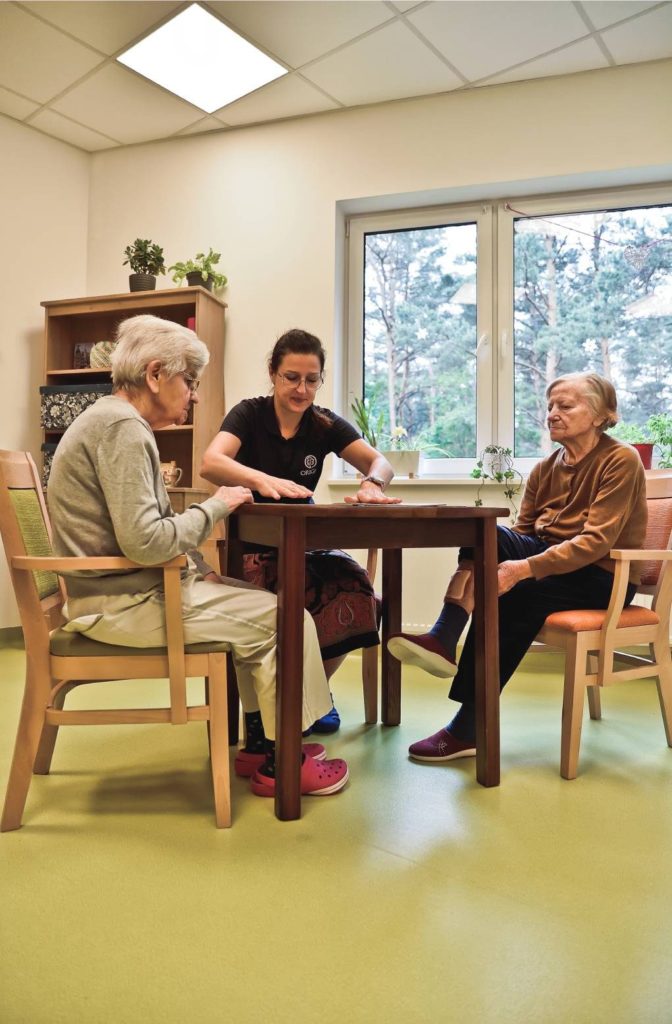
Residents live in specially adapted units, in groups of around 10–13 people. The small size of each group makes it easier to create a homely atmosphere and a sense of security. Each group also brings together patients at a similar stage of the disease, which supports the activation process. Activities can then be adjusted to the participants’ actual abilities.
Origin Polska also offers a separate rehabilitation programme for people with Parkinson’s disease.
Admission to the programme and available types of stay
Admission is based on a review of the patient’s medical records, an assessment of their current health and an interview with the patient and their family. The medical team makes its decision within a few days of receiving the complete documentation and then shares it with the applicants. Enquiries can be submitted through the offer enquiry form or by phone at +48 22 10 26 700.
The type of stay is matched to the patient’s situation, particularly their health and the extent to which relatives are able to provide care. Long-term stays are intended for people who need permanent care, whereas short-term and respite stays give family caregivers time to rest. A diagnostic stay, in turn, allows specialists to assess the patient’s condition. The programme also includes palliative and hospice care.
What medical and nursing care does the unit provide?
The foundation of the programme is round-the-clock nursing and personal care, supplemented by regular medical visits. In addition, residents stay in single or double rooms and receive five meals a day. Staff assist at mealtimes, adjusting the pace of eating and the consistency of food to each person’s abilities.
Participants’ health is monitored continuously, as the programme includes regular consultations with medical specialists and periodic diagnostic reports. The team of specialists consulting patients includes a neuropsychologist, a neurologopedist and a neurologist, among others. A surgeon and an orthopaedist also provide consultations, both at the outpatient clinic and as part of the inpatient diagnostic programme.
Unit staff also complete additional training in dementia care through the Origin Academy programme.
Occupational therapy as the basis of daily activity
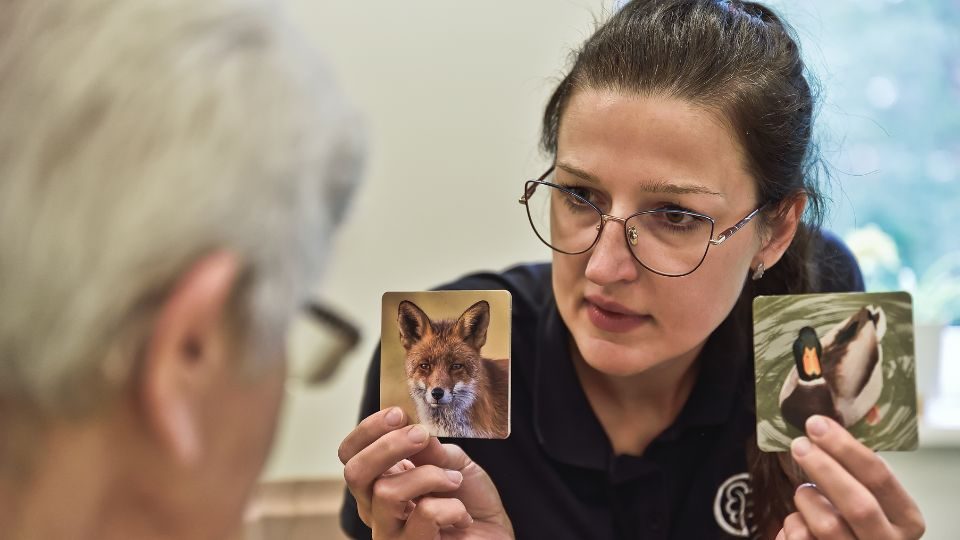
Occupational therapy is the main form of activity in the programme. Its aim is to engage the patient on many levels, building on their strengths and maintaining independence in simple everyday tasks. Memory training takes an open and gentle form, for example exercises in planning and focusing attention. Group work additionally encourages joint activity and helps residents form new relationships.
| Type of therapy | Example activities | Area supported |
|---|---|---|
| Art therapy | paper crafts, embroidery, decorating | manual dexterity, emotional expression |
| Sociotherapy | group work and conversation | social contact |
| Ergotherapy | work-based, movement and activating tasks | independence, physical mobility |
| Music therapy | singing, listening to music, dance sessions | mood, connection with the group |
| Silvotherapy | contact with nature | calming, outdoor activity |
| Group exercise | general fitness exercises adapted to ability | physical fitness |
| Bibliotherapy | reading books and poems aloud, discussing texts | attention, memory, communication |
| Cooking sessions | preparing simple dishes | everyday activities |
The activity calendar also includes special occasions and residents’ birthdays, which are celebrated together. There are dances with live music, as well as performances involving partner schools and nurseries.
The Snoezelen room and controlled sensory stimulation
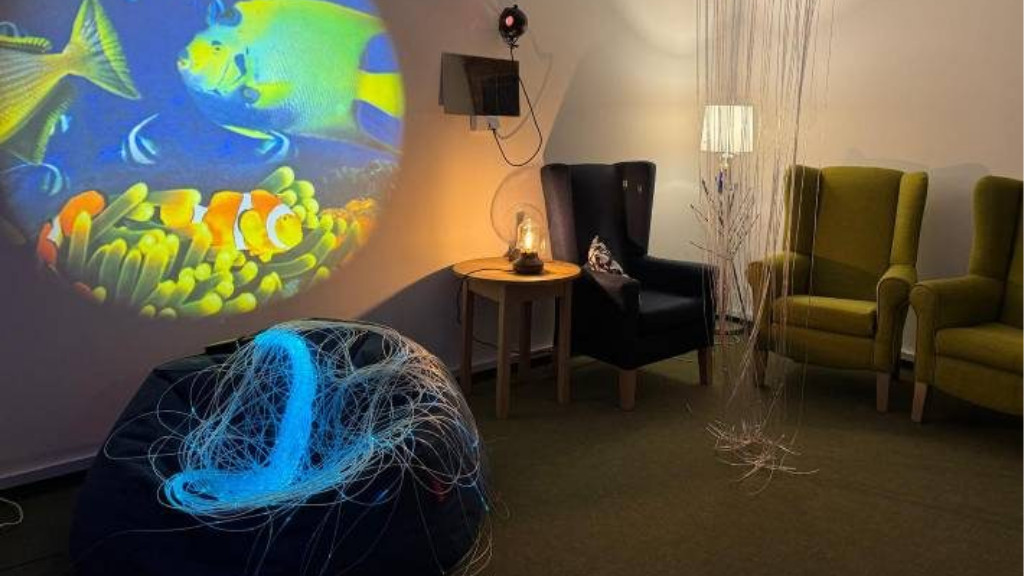
The room known as the Multisensory Room, or Snoezelen room, is designed for safe and controlled sensory stimulation. Therapy in this room aims to ease the tension, stress and anxiety that often accompany dementia-related conditions.
In people with dementia and Alzheimer’s disease, gentle sensory stimuli may activate memory and concentration. The sessions also support non-verbal communication by encouraging participants to respond to stimuli. Lower stress levels, in turn, may help reduce agitation and aggression and improve sleep quality.
A steady daily rhythm and an approach based on gerontological validation
A clear and predictable daily schedule supports a sense of security in people with dementia. On the unit, it takes into account each resident’s current needs, past habits and present difficulties. Staff also make use of natural daylight to support a healthy sleep-wake cycle. The interior design, lighting and colour scheme, meanwhile, are intended to aid orientation and reduce tension, aggression and depressive states.
During group sessions, residents talk about the calendar and current events. They also do gentle memory exercises and movement exercises in a circle, for example with balls. An important part of the schedule consists of purposeful activities, such as folding laundry or preparing simple desserts and cakes, which give residents a sense of being needed.
The team’s work follows the principle of gerontological validation. This approach involves helping the person orient themselves in the world around them and accepting their feelings and emotions. Residents can voice their opinions on group matters and influence its daily life, while caregivers encourage them to form and maintain relationships.
One of the programme’s main goals is to preserve physical mobility for as long as possible. The centre is surrounded by forest, so residents take supervised walks along paved paths. A therapeutic garden is also being created in the private pine park surrounding the building.
Frequently asked questions
Is the Memory Care programme only for people with Alzheimer’s disease?
The programme also accepts people with other forms of dementia, Parkinson’s disease and memory disorders of undetermined origin. Groups on the units are made up of patients at a similar stage of the disease.
How long does admission to the dementia care programme in Otwock take?
The medical team makes its decision within a few days of receiving the complete documentation. Before that, specialists review the medical records, assess the patient’s current health and talk with the patient and their family.
Can a person with dementia come for a short respite stay?
The programme offers short-term and respite stays. During this time, family caregivers have an opportunity to rest, while the patient remains under round-the-clock care.
Does a senior with dementia get a single room at the centre?
Accommodation is provided in single or double rooms. Availability for a specific date is best confirmed directly with the centre.
What activities do people with dementia take part in during the Memory Care programme?
The core is occupational therapy, including art therapy, music therapy and bibliotherapy. It is complemented by group exercise, cooking sessions and Snoezelen room sessions, selected to suit each participant’s abilities as part of their individual therapy programme.