A stroke rarely ends at hospital discharge. The harder work, regaining movement, speech and independence, usually happens over the months of rehabilitation that follow. For families in countries with long waiting lists or limited access to intensive therapy, looking abroad becomes a reasonable question. Poland now appears on many of those shortlists. Whether it is the right place, however, depends on far more than price.
What you’ll learn from this article
- Why the location and intensity of rehabilitation influence stroke recovery
- What makes Poland a credible option for treatment abroad, and where its limits lie
- Which questions separate a strong rehabilitation centre from a well-marketed one
- How timing, robotic therapy and length of stay affect the plan
- When travelling to Poland may not be the right decision for a particular patient
Poland can be a sound choice for stroke rehabilitation abroad, especially for patients who face long public queues at home or want intensive neurological therapy at a lower cost than private care in Western Europe. It is not automatically the right answer for everyone. The decision should rest on the patient’s medical stability, the quality of the specific centre, and practical factors like travel and length of stay.


Why stroke recovery depends on where you rehabilitate
Stroke is one of the leading causes of long-term disability among adults, a pattern confirmed by public health reviews such as the CDC’s work on stroke prevention and treatment. Survival is only the first stage. What happens afterwards shapes whether a person walks again, speaks clearly, or returns to daily life with some independence.
Recovery leans heavily on the brain’s capacity to reorganise, which therapists support through repeated, structured practice. That practice has to be frequent, intensive and properly supervised to make a difference. A patient who receives a few short sessions a week will progress differently from one who follows a daily, multidisciplinary programme.
This is exactly where access becomes the real issue. In several countries, public rehabilitation is rationed, delayed, or capped at a fixed number of weeks. When the most responsive early window passes in a waiting queue, families start to look outward. The question is not only “where is therapy cheaper” but “where can the patient get enough of the right therapy, soon enough.”
What makes Poland a credible option for treatment abroad
Poland sits inside the European Union, with modern private rehabilitation centres, trained neurologists and physiotherapists, and prices that are usually lower than equivalent private care in Western Europe. For many international patients, that combination is the main draw. The cost difference can turn a few weeks of therapy into several months within the same budget.
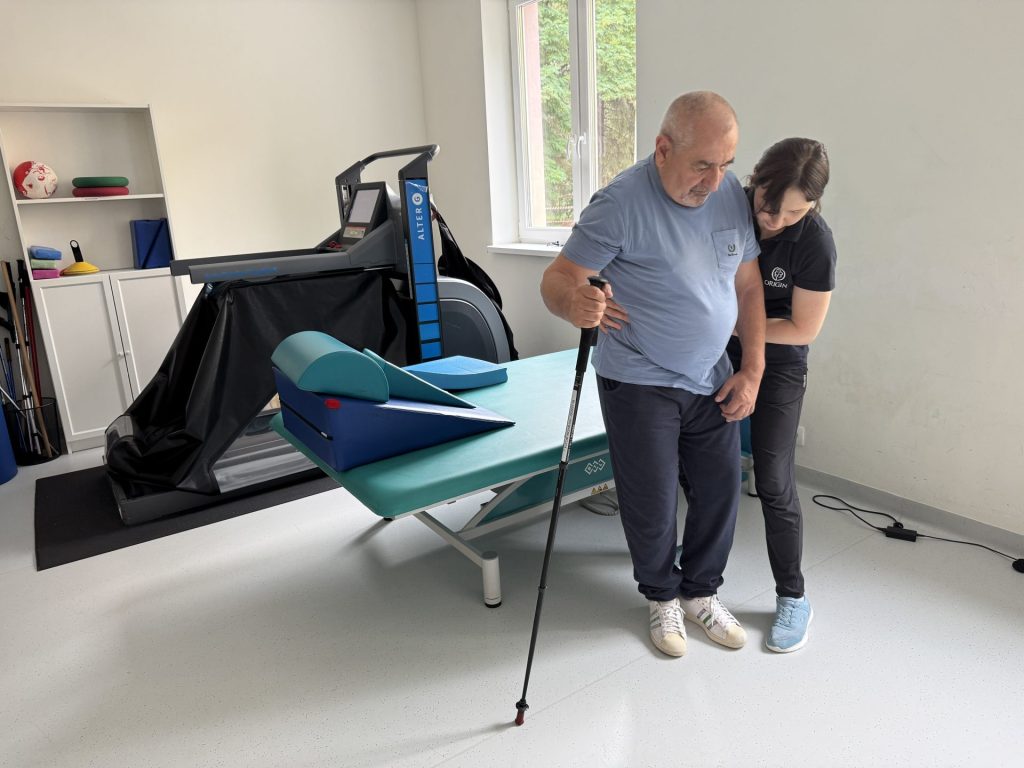
The clinical side matters more than the price tag. Stroke rehabilitation in a serious Polish centre is built around an interdisciplinary team: neurologists, physiotherapists, neuropsychologists, speech and language therapists, and nursing staff working from one shared plan. At the Origin Centres in Otwock and Kraków, this is the standard model, supported by the wider LNA Santé international healthcare network.
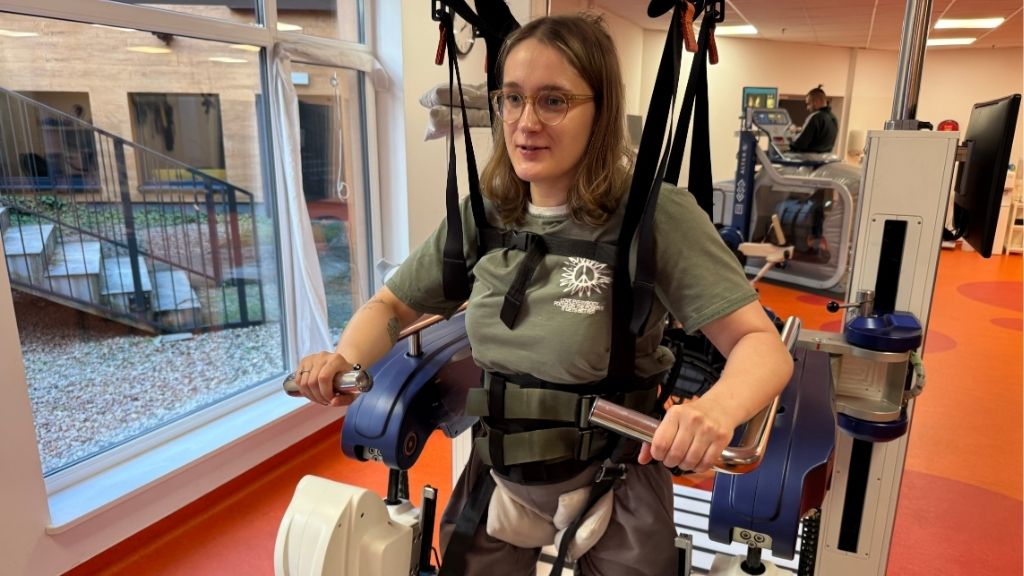
Robotic and technology-assisted therapy is another reason Poland gets attention. Devices that retrain walking or hand function let a patient complete far more repetitions per session than manual therapy alone. You can see the kind of robotic equipment used in stroke therapy, including the ReoAmbulator gait trainer and the Rapael glove for hand rehabilitation, on the centre’s equipment page.
Reading past the marketing: questions that reveal real quality
Every rehabilitation centre describes itself in warm language. The honest way to compare them is to ask specific, answerable questions and listen for specific answers. A centre that gives you exact figures and clear processes is usually one that runs them.
The table below sets out the factors worth weighing before you commit to any centre abroad, not only in Poland.
| Factor to compare | What to ask the centre | Why it matters |
|---|---|---|
| Therapy intensity | How many hours of direct therapy per day, and how many days a week? | Recovery tracks with volume of structured, supervised practice. |
| Team structure | Is the plan run by one interdisciplinary team or separate providers? | Coordinated teams adjust faster than disconnected specialists. |
| Progress review | How often is the plan reviewed, and do you receive written reports? | Regular review keeps therapy aligned with real change. |
| Medical complexity | Can they manage a tracheostomy, PEG tube, or ventilator support? | Not every centre is equipped for higher-dependency patients. |
| References | Can you read patient reviews or speak with past families? | Independent feedback balances the centre’s own claims. |
On the last point, it helps to look at unfiltered patient and family opinions rather than only the testimonials a centre selects. Consistent, detailed reviews carry more weight than a single glowing quote. Look for comments that describe the daily routine and the staff, not just the result.
Timing, intensity and the role of robotic therapy
Timing shapes expectations. Therapy that begins in the first days and weeks after a stroke generally offers the strongest chance of regaining lost functions, often starting while the patient is still in hospital. A good centre will reflect this in how it structures a programme around the time elapsed since the stroke and the patient’s NIHSS score, separating early rehabilitation within three months from later-stage work.
That said, late is not the same as hopeless. Patients who start months or years after a stroke can still make meaningful gains, especially with consistent, well-targeted therapy. The realistic message is that earlier tends to help more, not that a delayed start closes the door.
Robotic therapy fits into this picture as a tool, not a miracle. Machines increase the number of correct repetitions and keep movements precise when a patient is fatigued. They work best inside a plan led by therapists who decide when and how to use them. If a centre presents robots as the whole answer rather than one part of a personalised programme, treat that as a warning sign.
The practical side: language, logistics and length of stay
The medical case is only half of the decision, the other half is whether the stay is workable for the patient and the family. Distance, travel after a stroke, visas where relevant, and the comfort of a long stay all carry weight.
Language is a frequent worry. International-facing Polish centres usually run their care and communication in English, and the dedicated post-stroke rehabilitation programme is designed with foreign patients in mind. It is still worth confirming that therapists, not only the front desk, can communicate with the patient directly during sessions.
Length of stay depends on the severity of the injury and the patient’s goals. It can range from weeks to many months. Because of that, accommodation matters. Centres that offer inpatient rehabilitation stays with rooms for accompanying family members make a long programme far easier to sustain. Before travelling, a remote consultation on rehabilitation capacity can confirm whether the trip is justified and set honest expectations.
When Poland may not be the right answer for you
A fair article has to name the cases where travelling does not make sense. If a patient is medically unstable, very early in the acute phase, or unfit to travel safely, the priority is treatment close to home. Distance should never override safety.
Cost can also mislead. If your own healthcare system offers timely, intensive rehabilitation at little or no charge, the value of travelling abroad shrinks. The strongest case for Poland appears when the alternative is a long wait or expensive private care in your home country.
Finally, no responsible centre can promise a specific level of recovery. Outcomes depend on the stroke itself, the patient’s health, motivation and how early therapy begins. Poland can offer access, intensity and reasonable cost. It cannot offer guarantees, and any centre that does is one to avoid.
Frequently asked questions
Is rehabilitation in Poland cheaper than in Western Europe?
Private rehabilitation in Poland is generally more affordable than comparable private care in Western Europe. This is a common reason international patients consider it. The exact cost depends on the programme, its intensity and the length of stay. Ask each centre for a written breakdown so you compare like with like.
How soon after a stroke can rehabilitation abroad begin?
Rehabilitation ideally starts within the first days after a stroke, often in hospital. It then continues once the patient is medically stable. Travel abroad usually makes sense after that stabilisation, when the patient can safely make the journey. A remote consultation can confirm whether the timing is right.
Will language be a problem during treatment in Poland?
International-focused Polish centres typically deliver care and communication in English, including the therapy itself. The point worth checking is whether the treating therapists, not only administrative staff, communicate directly with the patient. Clear communication during sessions affects how well therapy works.
Can a patient with a tracheostomy or PEG tube travel for rehabilitation?
Some Polish centres accept higher-dependency patients, including those with a tracheostomy, a PEG feeding tube, or ventilator support. This is not universal, so confirm it before planning anything. Ask directly what level of medical and nursing support the centre provides around the clock.
How long should a stroke rehabilitation stay in Poland last?
There is no single answer. Length depends on the severity of the brain injury, the patient’s goals and response to therapy. Programmes can run from a few weeks to several months. A realistic centre will set the expected duration after assessing the patient, not before