Foreign patients can receive rehabilitation and treatment in Poland. Some pay privately, while others may claim reimbursement from their home health system. The harder questions are usually practical. They concern admission from abroad, funding and what to confirm before you travel.
What you’ll learn from this article
- Whether EU and non-EU patients can access care here, and on what terms
- How private rehabilitation differs from publicly funded treatment
- When the EU cross-border directive may reimburse part of your costs
- What admission from abroad involves, from records to accommodation
- Which questions to settle before booking travel
Yes, foreign patients can access rehabilitation and treatment in Poland. EU and EEA residents may use the cross-border healthcare framework, while patients from outside the EU usually arrange care privately. Either way, the route you choose shapes the cost, the paperwork and the timing.
Who counts as a foreign patient, and what that means in practice
A foreign patient, in this context, is anyone whose home health system sits outside Poland. That group is broad. It includes residents of other EU and EEA countries, patients travelling from outside the EU and foreign nationals already living or working here.
These distinctions matter less for access than people expect. Polish private rehabilitation centres generally accept patients regardless of nationality. What changes between groups is the funding route, not the right to be treated. Someone from Germany and someone from the United States can both book the same programme. The difference shows up later, when the bill is settled.
People arrive for different reasons. Some need structured recovery after a stroke, a spinal injury or major orthopaedic surgery. Others face long waiting times at home and look for an earlier start. The reason for the stay shapes the programme, while the country of origin shapes the paperwork.
Private rehabilitation as the most direct route for international patients
For most international patients, private care is the most direct route. It removes the need for prior approval from a home health system. You contact the centre, share medical information, agree a plan and confirm dates.
Private centres in Poland provide both outpatient and inpatient rehabilitation. Outpatient care suits patients who can travel in for sessions or stay nearby. Inpatient care suits more complex situations, where someone needs daily therapy and medical supervision under one roof.
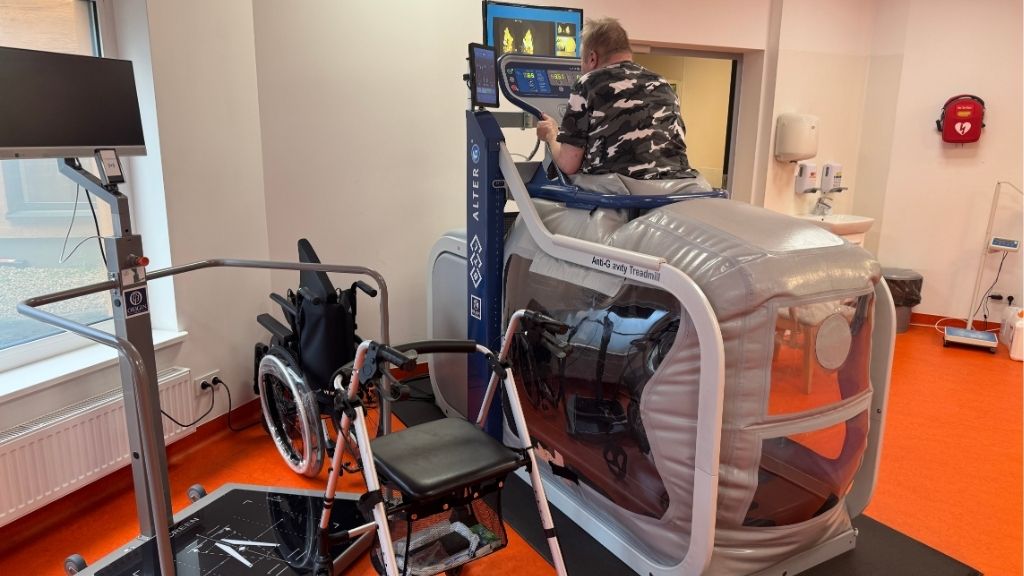
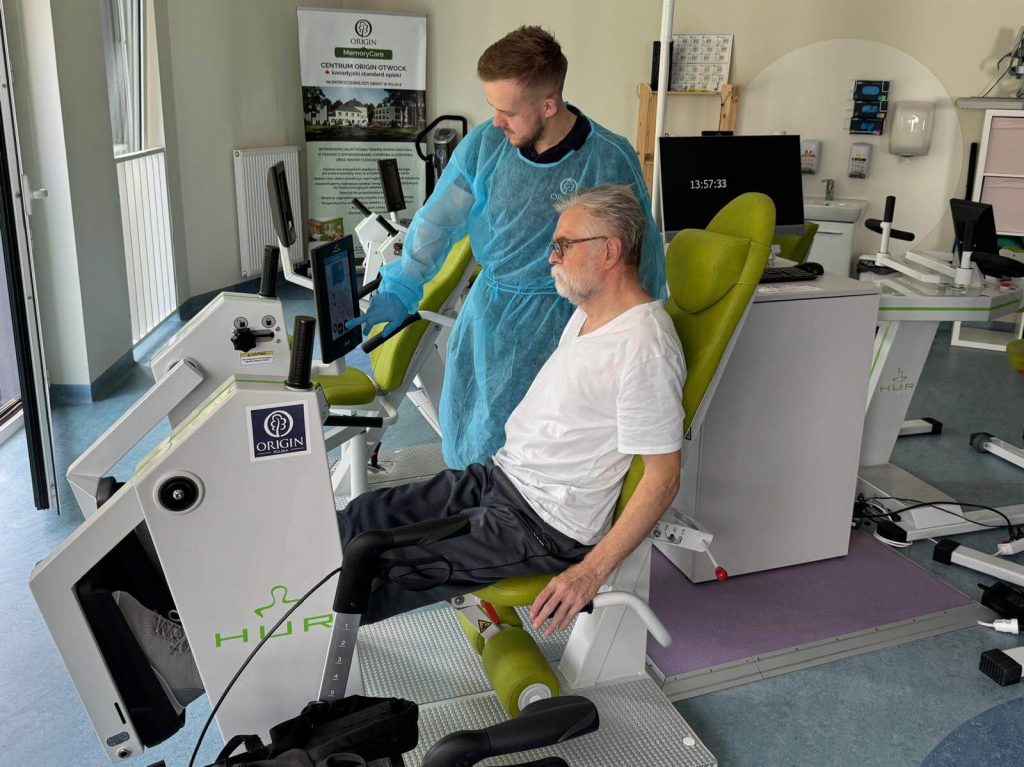
At Origin, our neurological and orthopaedic rehabilitation programmes cover conditions such as stroke, brain and spinal cord injury, Parkinson’s disease and recovery after orthopaedic surgery. We plan therapy for each patient rather than sell it as a fixed package. Part of that work uses robotic devices that support gait and upper-limb training, alongside conventional physiotherapy. Results depend on the individual, the diagnosis and the stage of recovery, so no centre can promise a fixed outcome.
How the EU cross-border healthcare directive can help with reimbursement
EU and EEA residents have an extra option. Under the EU directive on patients’ rights in cross-border healthcare, you can seek planned treatment in another member state. Your home system may then reimburse part of the cost. The European Commission explains the framework on its cross-border healthcare pages.
The rules are specific. Reimbursement is capped at what the same treatment would have cost in your home country, so you cover any difference. Travel and accommodation usually fall outside the scheme. For some care, especially treatment that needs an overnight hospital stay, your insurer may require prior authorisation before you travel.
A separate point often causes confusion. The European Health Insurance Card covers care that becomes necessary during a temporary stay, not treatment you plan in advance. Planned rehabilitation does not run on the EHIC. Each country runs a National Contact Point that explains local rules, and your own insurer confirms what it will repay. We cannot give legal advice, so confirm the detail with them before you commit.
| Funding route | Who it suits | What it typically covers | Step to take first |
|---|---|---|---|
| Private self-funding | Any patient, EU or non-EU | The agreed programme, billed directly | Contact the centre for a written quote |
| EU cross-border directive | EU and EEA residents | Up to the home-country treatment cost, claimed back | Check reimbursement and authorisation with your insurer |
| EHIC | EU and EEA visitors needing urgent care | Necessary care during a temporary stay only | Carry a valid card; it does not cover planned rehabilitation |
Language, communication and the patient journey from first contact to discharge
Language is one of the first worries for patients coming from abroad. Day-to-day therapy involves constant communication, from explaining exercises to discussing progress. A centre that works with international patients handles enquiries and coordination in English.
The journey usually starts before anyone travels. You send an enquiry, share recent medical documentation and describe the situation. From there, a clinician can give an initial view of whether rehabilitation is likely to help. At Origin, this early step can take the form of a consultation on rehabilitation capacity, which reviews realistic goals.
Clear communication continues through the stay. A care plan sets out the therapies involved and the goals agreed with the patient. Families often want regular updates, particularly for relatives recovering from stroke or living with dementia. If you want a tailored proposal, you can ask for an offer through the centre’s enquiry form and set out your needs.
What the admission process looks like for someone coming from abroad
Admission from abroad follows a recognisable pattern. First, you gather medical records: discharge summaries, imaging results and a current medication list. Documents in English help the team assess the case faster.
Next comes a remote review and a decision on suitable dates. Practical logistics matter here too. Origin runs two centres, one in Otwock near Warsaw and one in Kraków, both within reach of international airports. That makes the journey simpler for patients arriving by air.
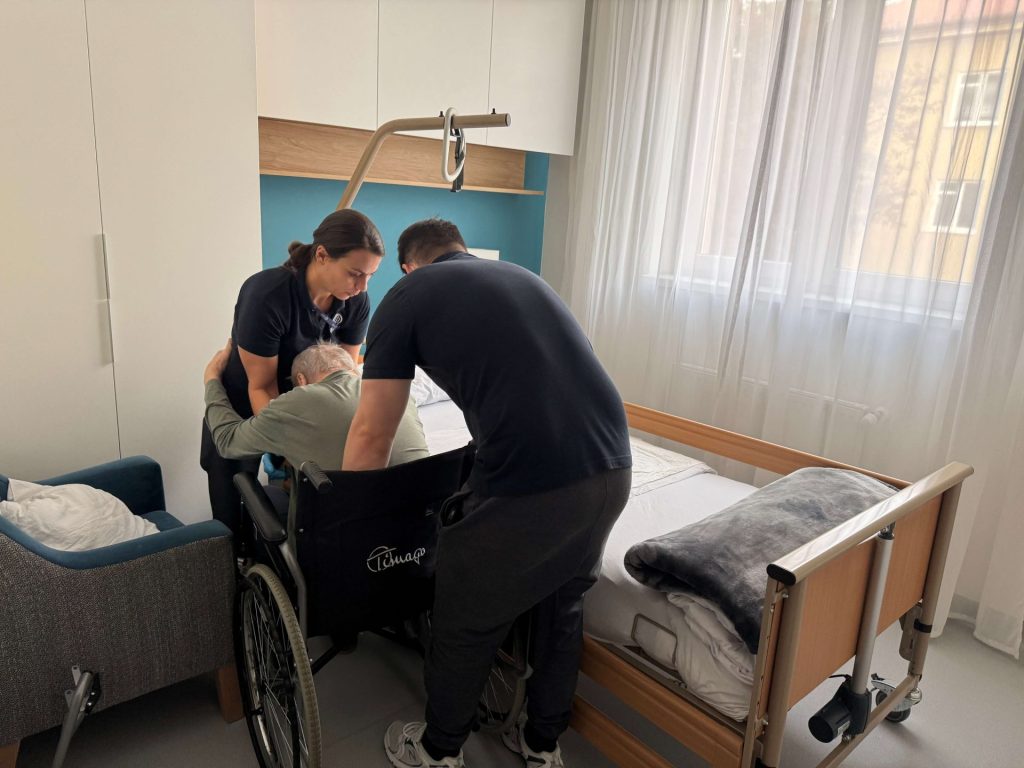
An inpatient rehabilitation stay brings therapy, accommodation and medical consultations together on one site. Rooms range from single occupancy to suites, and some allow a relative to stay nearby. For patients who need more daily help, nursing and caregiver support can be arranged. The length of an inpatient programme depends on the condition and its severity, not on a standard timetable.
Costs, paperwork and questions to settle before you travel
Cost is one reason patients look beyond their home country. Private rehabilitation in Poland is self-funded unless a reimbursement route applies. The sensible step is a written quote that lists therapy, accommodation and any extra services. A clear, itemised quote lets you compare options properly and avoids surprises later.
Paperwork deserves attention before booking flights. EU residents should confirm with their insurer what, if anything, will be repaid. Patients from outside the EU should check visa requirements, since Poland sits within the Schengen area. Travel insurance, continuity of medication and a written care plan all belong on the same checklist.
A few questions settle most of the uncertainty. How long is the recommended stay, and on what does it depend? What does the daily programme include? Who coordinates care in English, and how are families kept informed? Honest answers to these tell you a great deal about a centre.
Frequently asked questions
Can someone from outside the EU come to Poland for rehabilitation after a stroke?
Yes. Patients from outside the EU generally access rehabilitation in Poland as private, self-funded care. You contact the centre directly, share medical records and agree a plan, without approval from a home health system. Visa rules for the Schengen area apply, so check those early.
Will my home country reimburse rehabilitation treatment I receive in Poland?
Possibly, if you live in an EU or EEA country. The cross-border healthcare directive can reimburse part of the cost, up to what the treatment would have cost at home. Confirm the detail and any prior authorisation with your insurer or National Contact Point first, as we cannot give legal advice.
Do I need to speak Polish to be treated at a private rehabilitation centre in Poland?
No. Centres that work with international patients coordinate care and therapy in English. Your medical documents are easier to assess when translated, but you do not need Polish to be admitted. It helps to confirm English-speaking coordination when you first enquire.
How long does inpatient neurological rehabilitation in Poland usually last?
It varies. The length of a neurological rehabilitation programme depends on the diagnosis, the stage of recovery and individual goals. Some patients stay for a few weeks, others for several months. A clinician can suggest a realistic range after reviewing your records.
Can a family member stay with the patient during an inpatient rehabilitation stay?
Often, yes. Many inpatient centres offer rooms that let a relative stay nearby, and some provide additional nursing or caregiver support. This matters for patients recovering from stroke or living with dementia. Ask about family accommodation when you request a quote.