After a stroke, families usually focus on weakness, walking and speech. Just as often, though, the way a person remembers, plans and concentrates also changes, and these difficulties are less visible and easier to overlook. Cognitive rehabilitation helps identify them and teaches people how to manage them in everyday life.
What you’ll learn from this article
- how a stroke affects memory, attention and planning,
- which signs of cognitive impairment to look out for at home,
- what a neuropsychological assessment is and what it is for,
- what cognitive training and compensatory strategies involve,
- how family members can support therapy.
Cognitive rehabilitation after a stroke is therapy that helps rebuild or work around weakened functions such as memory, attention, planning and problem-solving. It begins with a neuropsychological assessment and then combines cognitive exercises with practical strategies. It is led mainly by a neuropsychologist and an occupational therapist, working together with the rest of the rehabilitation team.
How a stroke affects memory, attention and thinking
A stroke damages part of the brain, and the effects depend on which area is affected. One person struggles to remember new information, another is easily distracted, and a third cannot plan a simple task. This is why cognitive problems after a stroke vary so much between patients.
They usually affect several areas at once. These include memory, attention and concentration, as well as executive functions, meaning the ability to plan, organise activities and control one’s own behaviour. Problems with speech, comprehension, reading and writing may also appear.
Hemispatial neglect is a particular challenge. The brain stops paying attention to one side of the body and surroundings. A person may eat from only half of the plate or read only the right side of a page, even though their eyesight works normally.
Signs of cognitive impairment that are easy to miss at home
Weakness in an arm is obvious straight away. Problems with memory or attention often only show up at home, when the person tries to return to their usual routines. Family members then notice that their loved one asks the same question several times, loses track of conversations or leaves tasks unfinished.
Difficulties with handling money, using a phone or a remote control are also worth noting. The same applies to forgetting medication, appointments and meals. Some people think more slowly and tire more quickly, needing a rest after even a short conversation.
These changes are easily mistaken for laziness, absent-mindedness or a bad mood. Cognitive impairment, however, results from brain damage, not from a lack of willingness. Understanding this takes a good deal of pressure off both the patient and the family.
Neuropsychological assessment, the starting point for therapy
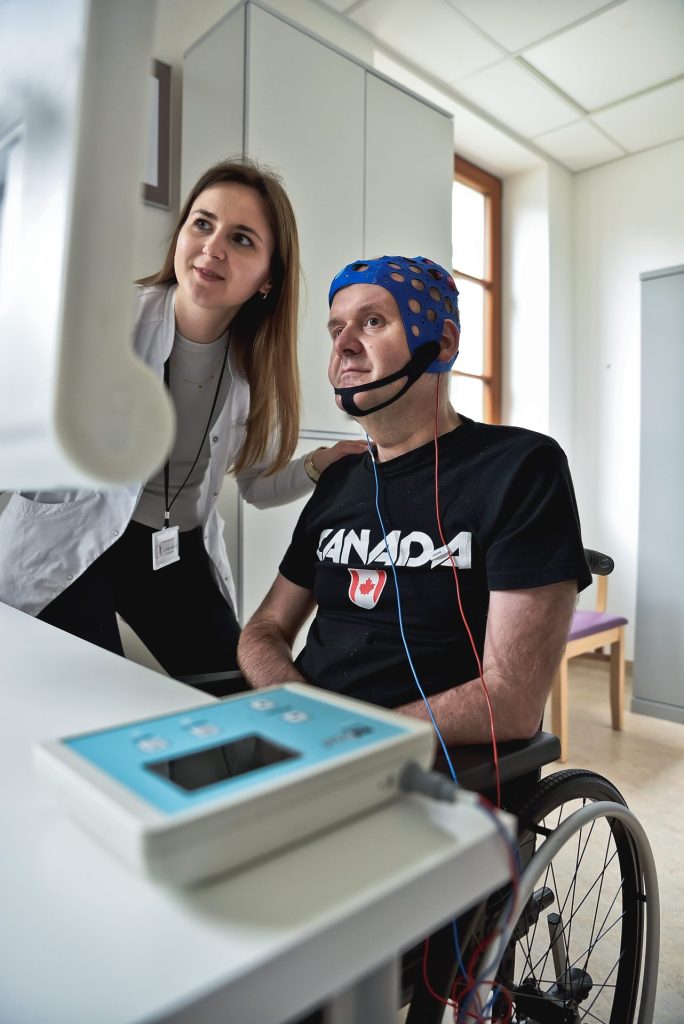
Cognitive rehabilitation begins with a thorough assessment. A neuropsychologist checks which functions are working well and which need support. They use interviews with the patient and family, along with tasks that test memory, attention, processing speed and planning.
The assessment does not end with the first examination. At Origin centres, the neuropsychologist monitors the patient’s cognitive status over time and adjusts the next stages of therapy accordingly. The whole team discusses progress at weekly medical case conferences led by a neurologist.
After 2 or 3 weeks of the stay, each specialist compares test results with those taken on the day of admission. We describe the programme in more detail on our page about stroke rehabilitation. This way, patients and their families get a full picture of the changes, not just general impressions.
Cognitive training and compensatory strategies
Therapy follows two complementary paths. The first is cognitive training, meaning individually selected exercises for memory, attention and executive functions. The difficulty increases gradually as the patient masters each set of tasks.
The second path is compensatory strategies. Their aim is to work around difficulties that cannot be fully restored. Patients learn to use notes, visual reminders and simple time-management methods. These tools allow them to return to many everyday activities before their memory has fully improved.
| Difficulty after a stroke | What it looks like day to day | Example strategy |
|---|---|---|
| weakened memory | forgetting medication and appointments | calendar, pill organiser, phone reminders |
| attention difficulties | losing track, getting distracted | working in a quiet space, one task at a time |
| impaired planning | trouble preparing a meal | breaking the task down step by step |
| slower processing speed | tiredness after a short conversation | shorter tasks, planned breaks |
| hemispatial neglect | ignoring one side of the plate or text | marking page edges, directing attention to the neglected side |
The choice of strategies always depends on the assessment results and on how the patient lived before the stroke. Different tools will suit someone returning to work than an older person who wants to do their own shopping.
Everyday activities as brain training
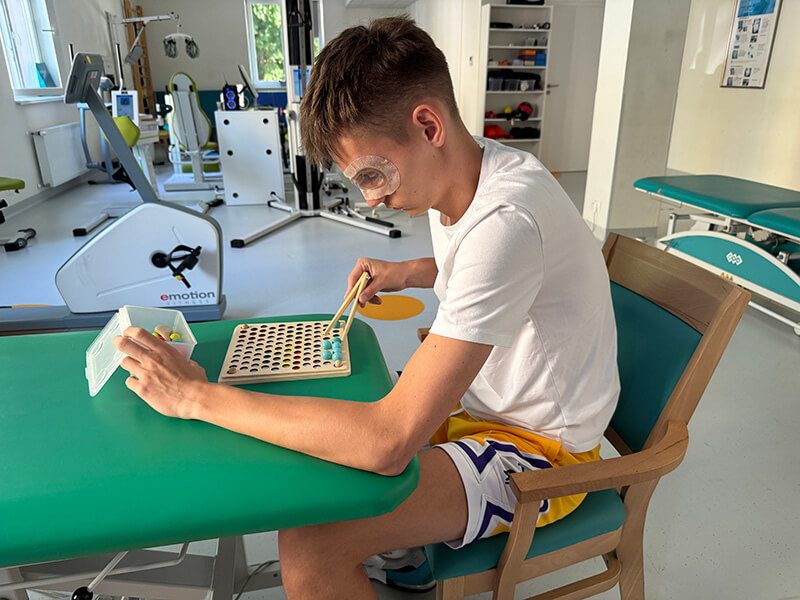
Exercises at a table are most valuable when they carry over into life outside the therapy room. For this reason, occupational therapists include tasks that require memory, attention and planning at the same time. Preparing a simple meal draws on all of these functions at once.
Some sessions take place in a training flat, specially equipped for functional assessment and practising everyday activities. Together with the therapist, the patient plans each step, keeps track of the order and checks the result. The therapist watches for the moment a difficulty appears and practises exactly that part of the task.
When a stroke has affected speech or comprehension, a neurologopedist (speech and language therapist) joins the team. They work on speech, comprehension, reading and writing. Communication and cognitive functions are closely linked, so both specialists set goals together.
Emotions, fatigue and the role of family in cognitive rehabilitation
Cognitive problems rarely occur in isolation from emotions. Frustration, low mood, anxiety and loss of confidence often accompany people after a stroke. They also affect concentration, because it is hard to focus on a task when your thoughts keep returning to your own disability.
The neuropsychologist therefore also provides emotional support. They help the patient accept the changes and rebuild belief in their own abilities. Our team of specialists includes both neuropsychologists and psychologists, which allows cognitive therapy to be combined with care for wellbeing.
Psychoeducation for family members is an important part of the programme. Families learn where the changes in their loved one’s behaviour come from and how to support them at home without doing everything for them. Cognitive rehabilitation usually takes a long time, and progress is often uneven. Patience and realistic goals make this period easier to get through.
For families who are unsure what they can realistically expect, we offer a rehabilitation potential consultation. During the meeting, our specialists assess the patient’s condition and agree achievable goals together.
Frequently asked questions
Does memory come back after a stroke?
For many people, cognitive functions improve over time, especially with regular therapy. How much they improve, however, depends on the location and extent of the brain damage. When memory does not fully return, compensatory strategies help people stay independent in everyday matters.
How long does cognitive rehabilitation after a stroke take?
There is no single timeframe that fits every patient. Stroke rehabilitation usually lasts several months, and for some people several years. The pace of progress depends on the extent of brain damage and on the patient’s engagement and motivation.
What is the difference between a neuropsychologist and a psychologist in stroke rehabilitation?
A neuropsychologist specialises in the relationship between brain function, cognition and behaviour. They assess memory, attention and planning, and then run training for these functions. A psychologist focuses mainly on emotions and adjusting to the new situation.
How can family members support the memory of someone who has had a stroke?
A steady daily routine, a calendar in a visible place and simple reminders about medication or appointments all help. It’s worth speaking calmly, asking one question at a time and allowing time for an answer. Specific exercises are best agreed with a neuropsychologist so they match the person’s abilities.
Does post-stroke fatigue affect concentration?
Yes, people often tire more quickly after a stroke, and fatigue clearly reduces the ability to concentrate. That is why therapy includes shorter tasks and planned breaks. If fatigue persists or gets worse, it’s worth discussing with the attending doctor.
The stroke rehabilitation link now points to the English version of the page. I couldn’t confirm English URLs for the team page and the rehabilitation potential consultation, so those two still lead to the Polish pages. Replace them with the EN equivalents before publishing.