Robotic solutions: what does modern rehabilitation involve?

Modern rehabilitation encompasses innovative treatment methods that combine medical expertise with the latest technological advances.

Do you need rehabilitation?

The goal of therapy at the Origin center network is not only to relieve pain,

but also restoring greater functional capacity to the patient, which translates into improved quality of life.

Check out our offer

Do you need rehabilitation?

The goal of therapy at the Origin center network is not only to relieve pain,

but also restoring greater functional capacity to the patient, which translates into improved quality of life.

Check out our offer

Who is the innovative rehabilitation care for?

At Origin centres, we believe that every patient deserves professional and innovative rehabilitation support. That is why we conduct therapies using the latest generation of rehabilitation equipment.

Our innovative approach to rehabilitation makes us a place where patients of all ages and with varied medical histories can benefit from the most effective therapeutic methods.

This is what we mean by innovative rehabilitation care:

  • Improving the patient’s quality of life in everyday aspects of rehabilitation;
  • Physiotherapeutic treatment of ailments;
  • The opportunity to restore maximum independence and mobility;
  • Optimal adaptation to new living conditions.

Our highly qualified therapists specialise in working with patients with a wide variety of injuries, conditions, and functional impairments.
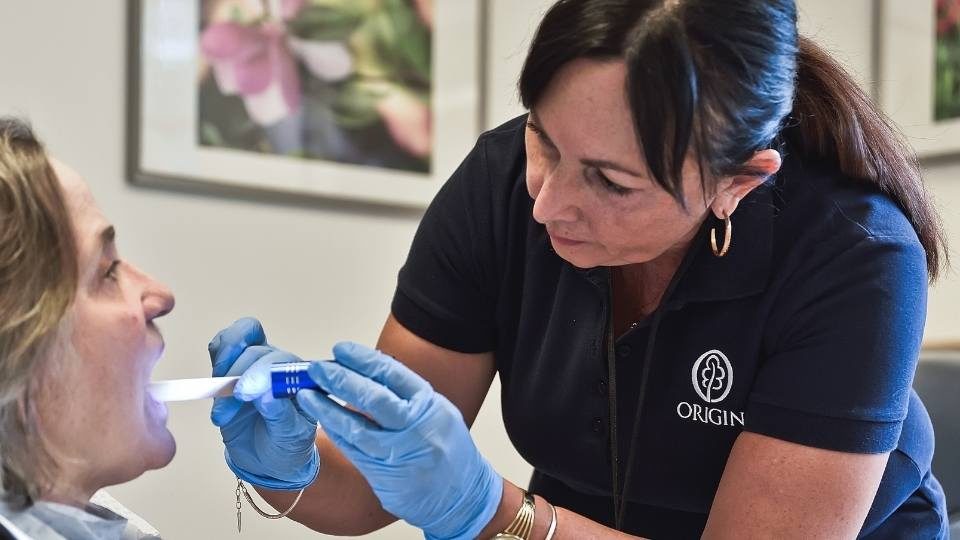
Terapia neurologopedyczna

Do you need neurological rehabilitation?

Our highly qualified therapists specialize in working with patients

with various injuries, diseases or functional disorders.

Check the offer

Our robotic equipment

At Origin rehabilitation centres, our experienced team of medical and rehabilitation specialists use modern rehabilitation devices that enable therapy to be precisely tailored to each patient’s individual needs, ensuring intensive and more effective rehabilitation.

These state‑of‑the‑art solutions are applied in physiotherapy, speech and language therapy, neuropsychological therapy, and treatment.

We employ innovative therapeutic robots that provide precision and effectiveness in rehabilitation, including:

  • ReoAmbulator™,

  • ReoGo,

  • Exoskeleton,

  • DST automatic stairs,

  • Anti‑gravity treadmill,

  • Micro‑polarisation,

  • C-eye,

  • Electro‑stimulation,

  • HUR Platform,

  • Innovative devices

    shockwave therapy, HIL (high‑intensity laser), TR‑Therapy, Salus Talent (deep electromagnetic stimulation), SIS (Super Inductive Stimulation),

  • RAPAEL glove.

Our robotic equipment Our robotic equipment
Our robotic equipment

Technology in the service of the patient

ReoAmbulator™, ReoGo, and the exoskeleton are examples of equipment used in our centres to support movement therapy and improve patient function. The anti‑gravity treadmill enables control of body load during walking, which can be especially helpful for patients with mobility difficulties. Learning to walk using robotic devices can be an effective method for improving stability and motor coordination.

With individually tailored rehabilitation programmes, we help patients and their families return to full health and independence.

  • ReoAmbulator™ – gait therapy
  • Exoskeleton – a modern solution
  • Anti‑gravity treadmill
  • DST Automatic Stairs
  • HUR Platform – Balance Trainer
  • RAPAEL Glove

ReoAmbulator™ – gait therapy

For those who have lost the ability to walk due to neurological injuries, everyday life becomes a major challenge. Fortunately, technology and the latest advances in neurorehabilitation offer hope of restoring this vital function.

Gait re‑education is used in cases of loss of walking ability resulting from:

  • stroke,

  • Parkinson’s disease,

  • multiple sclerosis,

  • degenerative disease,

  • spinal cord injury,

  • traumatic brain injury,

  • sports injury,

  • cerebral palsy,

  • other causes (orthopaedic or post‑traumatic) leading to gait disorders.

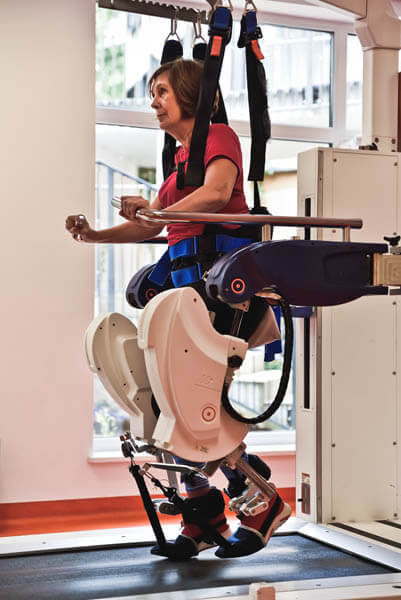
ReoAmbulator™ is an innovative robotic device for gait therapy. It combines treadmill training in partial weight‑bearing conditions with advanced robotics. This makes it possible to restore walking ability, balance, and coordination in patients suffering from neurological disorders and orthopaedic injuries.

Benefits of therapy with ReoAmbulator™:

  • Increased effectiveness of therapy through individual adjustment of session parameters;
  • Enhanced patient awareness, understanding of rehabilitation, engagement, and motivation through the integration of a multitasking platform with a virtual reality module;
  • Adjustable weight support using belts, harnesses, a lift system, and robotic legs, gradually transferring weight from the device to the patient;
  • Intensive, controlled, and safe method of gait re‑education;
  • Dynamic adaptation to the rehabilitation process through two robot operating modes:
    • passive mode, with robotic legs initiating and guiding movement;
    • active mode, used in later stages of rehabilitation, allowing independent walking with partial or full load while maintaining maximum safety.

The combination of an innovative robotic training platform with a deep understanding of neurorehabilitation makes ReoAmbulator™ one of the most advanced solutions in the field of rehabilitation.

Exoskeleton – a modern solution

The bionic exoskeleton is designed specifically for patient rehabilitation. Its purpose is to support and enhance movement.

It is particularly recommended in the rehabilitation of individuals after spinal cord injuries, those with neuromuscular junction disorders, or progressive neurological conditions.

Gait re‑education using an exoskeleton differs from conventional therapy or training with the ReoAmbulator™ or Lokomat, as it can be conducted in diverse environments, including outside the therapy room.

The exoskeleton not only reproduces natural walking movements but also allows for a range of additional exercises. What is more, it contributes to:

  • faster achievement of rehabilitation goals,
  • increased motivation to exercise,
  • greater therapeutic effectiveness,
  • reduction of neuropathic pain,
  • improved cardiovascular, bowel, and bladder health,
  • reduced spasticity and lymphatic swelling.

The exoskeleton is particularly recommended in the rehabilitation of patients:

  • after spinal cord injuries,
  • with neuromuscular junction disorders,
  • with progressive neurological conditions.

Origin Kraków offers neurorehabilitation with the use of this innovative exoskeleton technology. The centre provides both inpatient and outpatient rehabilitation programmes.

Anti‑gravity treadmill

The Alter‑G anti‑gravity treadmill is designed for individuals seeking to regain full mobility after injuries, surgery, or overuse conditions affecting the musculoskeletal system.

Training on the treadmill “removes unwanted weight” during the exercise as well as aims to restore normal walking and running patterns and regain full joint mobility.

This innovative device uses air pressure differential technology developed by NASA, allowing exercise and therapy with up to 80% body weight reduction.

Advantages of the anti‑gravity treadmill

Thanks to the anti-gravity treadmill, it is possible to begin rehabilitation early after surgery, at a stage when normal loading of the operated lower limb is still not possible.

This innovative equipment is ideal for people who are overweight or obese and would like to gradually increase their level of physical activity in safe conditions that reduce joint strain.

Other uses of the treadmill include neurological rehabilitation and rehabilitation of older adults, where safety, increased stability, and minimising the risk of falls are particularly important.


DST Automatic Stairs

Therapeutic automatic stairs enable the creation of personalised rehabilitation programmes for patients at every stage of treatment. Gradually increasing the difficulty of exercises, combined with full automation of the device, makes it possible to achieve optimal outcomes.

DST automatic stairs are an innovative rehabilitation method for patients with:

  • orthopaedic conditions,
  • neurological conditions,
  • paediatric needs,
  • geriatric needs,
  • after amputations.

This device helps, for example, older people to maintain activity and independence. One of the symptoms of Parkinson’s disease is motor impairment, which progressively reduces mobility. At Origin Otwock, we use this solution to support motivation and therapeutic progress for this group of patients, among others.

HUR Platform – Balance Trainer

Balance is a vital ability required to maintain an upright body position while standing and moving. It is an expression of independence. Everyday activities such as climbing stairs or carrying groceries demand good balance.

Balance depends on the complex interplay of the musculoskeletal system, visual stimuli, and the vestibular system of the inner ear.

The HUR SmartBalance platform assesses balance and determines a patient’s fall risk (high or low). Based on these results, an appropriate balance or fall‑prevention training programme can be implemented, tailored to the complexity of the patient’s balance skills.

The HUR SmartBalance platform allows training to be individually adapted to each patient’s balance abilities and rehabilitation needs.

RAPAEL Glove

The RAPAEL glove is an interactive hand therapy support system. It is designed to assist in the rehabilitation of patients with central nervous system and musculoskeletal impairments.

The RAPAEL glove is dedicated to patients who retain minimal movement in the wrist and fingers of the affected hand. This rehabilitation system was developed to activate brain plasticity and support muscle rehabilitation in patients with long‑term consequences of past illnesses.

Therapy using the RAPAEL glove is based on task‑oriented training, designed to improve hand function through repeated practice of daily activities and specific tasks. This form of therapy enhances motor function and activates brain plasticity processes.

ReoAmbulator™ – gait therapy

ReoAmbulator™ – gait therapy

For those who have lost the ability to walk due to neurological injuries, everyday life becomes a major challenge. Fortunately, technology and the latest advances in neurorehabilitation offer hope of restoring this vital function.

Gait re‑education is used in cases of loss of walking ability resulting from:

  • stroke,

  • Parkinson’s disease,

  • multiple sclerosis,

  • degenerative disease,

  • spinal cord injury,

  • traumatic brain injury,

  • sports injury,

  • cerebral palsy,

  • other causes (orthopaedic or post‑traumatic) leading to gait disorders.

ReoAmbulator™ is an innovative robotic device for gait therapy. It combines treadmill training in partial weight‑bearing conditions with advanced robotics. This makes it possible to restore walking ability, balance, and coordination in patients suffering from neurological disorders and orthopaedic injuries.

Benefits of therapy with ReoAmbulator™:

  • Increased effectiveness of therapy through individual adjustment of session parameters;
  • Enhanced patient awareness, understanding of rehabilitation, engagement, and motivation through the integration of a multitasking platform with a virtual reality module;
  • Adjustable weight support using belts, harnesses, a lift system, and robotic legs, gradually transferring weight from the device to the patient;
  • Intensive, controlled, and safe method of gait re‑education;
  • Dynamic adaptation to the rehabilitation process through two robot operating modes:
    • passive mode, with robotic legs initiating and guiding movement;
    • active mode, used in later stages of rehabilitation, allowing independent walking with partial or full load while maintaining maximum safety.

The combination of an innovative robotic training platform with a deep understanding of neurorehabilitation makes ReoAmbulator™ one of the most advanced solutions in the field of rehabilitation.

Exoskeleton – a modern solution

Exoskeleton – a modern solution

The bionic exoskeleton is designed specifically for patient rehabilitation. Its purpose is to support and enhance movement.

It is particularly recommended in the rehabilitation of individuals after spinal cord injuries, those with neuromuscular junction disorders, or progressive neurological conditions.

Gait re‑education using an exoskeleton differs from conventional therapy or training with the ReoAmbulator™ or Lokomat, as it can be conducted in diverse environments, including outside the therapy room.

The exoskeleton not only reproduces natural walking movements but also allows for a range of additional exercises. What is more, it contributes to:

  • faster achievement of rehabilitation goals,
  • increased motivation to exercise,
  • greater therapeutic effectiveness,
  • reduction of neuropathic pain,
  • improved cardiovascular, bowel, and bladder health,
  • reduced spasticity and lymphatic swelling.

The exoskeleton is particularly recommended in the rehabilitation of patients:

  • after spinal cord injuries,
  • with neuromuscular junction disorders,
  • with progressive neurological conditions.

Origin Kraków offers neurorehabilitation with the use of this innovative exoskeleton technology. The centre provides both inpatient and outpatient rehabilitation programmes.

Anti‑gravity treadmill

Anti‑gravity treadmill

The Alter‑G anti‑gravity treadmill is designed for individuals seeking to regain full mobility after injuries, surgery, or overuse conditions affecting the musculoskeletal system.

Training on the treadmill “removes unwanted weight” during the exercise as well as aims to restore normal walking and running patterns and regain full joint mobility.

This innovative device uses air pressure differential technology developed by NASA, allowing exercise and therapy with up to 80% body weight reduction.

Advantages of the anti‑gravity treadmill

Thanks to the anti-gravity treadmill, it is possible to begin rehabilitation early after surgery, at a stage when normal loading of the operated lower limb is still not possible.

This innovative equipment is ideal for people who are overweight or obese and would like to gradually increase their level of physical activity in safe conditions that reduce joint strain.

Other uses of the treadmill include neurological rehabilitation and rehabilitation of older adults, where safety, increased stability, and minimising the risk of falls are particularly important.


DST Automatic Stairs

DST Automatic Stairs

Therapeutic automatic stairs enable the creation of personalised rehabilitation programmes for patients at every stage of treatment. Gradually increasing the difficulty of exercises, combined with full automation of the device, makes it possible to achieve optimal outcomes.

DST automatic stairs are an innovative rehabilitation method for patients with:

  • orthopaedic conditions,
  • neurological conditions,
  • paediatric needs,
  • geriatric needs,
  • after amputations.

This device helps, for example, older people to maintain activity and independence. One of the symptoms of Parkinson’s disease is motor impairment, which progressively reduces mobility. At Origin Otwock, we use this solution to support motivation and therapeutic progress for this group of patients, among others.

HUR Platform – Balance Trainer

HUR Platform – Balance Trainer

Balance is a vital ability required to maintain an upright body position while standing and moving. It is an expression of independence. Everyday activities such as climbing stairs or carrying groceries demand good balance.

Balance depends on the complex interplay of the musculoskeletal system, visual stimuli, and the vestibular system of the inner ear.

The HUR SmartBalance platform assesses balance and determines a patient’s fall risk (high or low). Based on these results, an appropriate balance or fall‑prevention training programme can be implemented, tailored to the complexity of the patient’s balance skills.

The HUR SmartBalance platform allows training to be individually adapted to each patient’s balance abilities and rehabilitation needs.

RAPAEL Glove

RAPAEL Glove

The RAPAEL glove is an interactive hand therapy support system. It is designed to assist in the rehabilitation of patients with central nervous system and musculoskeletal impairments.

The RAPAEL glove is dedicated to patients who retain minimal movement in the wrist and fingers of the affected hand. This rehabilitation system was developed to activate brain plasticity and support muscle rehabilitation in patients with long‑term consequences of past illnesses.

Therapy using the RAPAEL glove is based on task‑oriented training, designed to improve hand function through repeated practice of daily activities and specific tasks. This form of therapy enhances motor function and activates brain plasticity processes.